


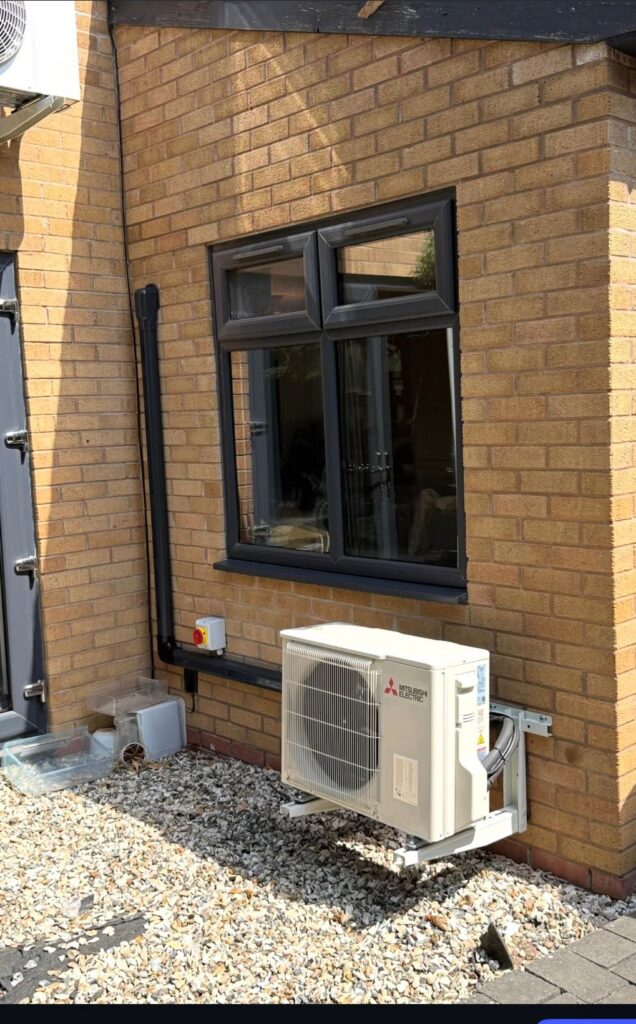
A warm bedroom, stuffy office or overheated shop can make everyday life uncomfortable. Air conditioning can help, but a good installation starts with the property, the room and the way you use it.
If you are searching for how to install air conditioning unit uk, start with a survey from a suitable installer. They should assess the cooling demand, choose suitable equipment, check permissions and plan the pipework, drainage and electrical supply. A fixed split system containing F gas needs appropriately qualified people to carry out the refrigerant installation.
For property owners in Birmingham, Birmingham Refrigeration & Air Conditioning provides a local route to discussing installation options. This guide explains what to consider before booking and what to expect when the work begins.
How to Install an Air Conditioning Unit in the UK
The installation process depends on the type of unit.
A portable air conditioner usually needs a suitable socket, a safe position and an exhaust hose fitted through the window kit specified by its manufacturer. Some models also need you to empty collected water or arrange drainage.
A fixed split system has indoor and outdoor equipment connected by refrigerant pipes and electrical wiring. It needs a planned installation, specialist equipment and proper testing.
For most people researching how to install air conditioning unit uk, the main steps are:
- Arrange a property survey.
- Choose the system and its capacity.
- Confirm permissions and building requirements.
- Agree the position of each unit.
- Plan power, pipes and water drainage.
- Have the equipment professionally fitted and tested.
- Receive the controls demonstration and paperwork.
Understanding these steps helps you compare quotations and spot missing work before agreeing a price.
Choosing the Right Air Conditioning System
Choose equipment around the rooms you actually use. A bedroom used at night has different needs from a busy salon or a kitchen extension.
Portable air conditioning
A portable unit may suit occasional cooling where permanent equipment is unsuitable. Check the exhaust arrangement, operating noise and window access before buying.
Keep the hose within the limits in the instructions. An open window without a properly fitted kit can allow warm air back into the room.
Single split air conditioning
A single split system connects one indoor unit to one outdoor unit. It can suit a bedroom, lounge, home office or small business space.
Wall mounted indoor units are a common option. Their position should allow air to reach the occupied part of the room.
Multiple indoor units
A multi split system connects several indoor units to one outdoor unit. It may be useful where several rooms need separate temperature control and outdoor space is limited.
Ask how the available capacity is shared when several rooms call for cooling together.
Ducted and ceiling systems
Ceiling cassettes and ducted equipment may suit larger rooms or suitable ceiling spaces. They need room for installation, drainage and future maintenance.
Many fixed systems also provide heating. For a simple explanation of the underlying process, see air conditioning on Wikipedia.
When considering how to install air conditioning unit uk, decide whether you want cooling alone or useful heating as well.

Checking the Property Before Installation
A survey should cover more than the room dimensions.
The installer needs to inspect the proposed mounting surface, access outside, routes through the building and the electrical supply. Photographs help with initial discussions, but hidden services and access restrictions may need closer inspection.
Discuss these points:
- Whether you own or rent the property.
- Whether there is a lease or shared freehold.
- Where people sit, sleep and work.
- Whether pipes will be visible inside.
- How collected water will drain.
- Whether external access needs specialist equipment.
- Whether planned building work could affect the installation.
In an older Birmingham property, the wall construction and existing alterations may influence the route. In a flat, external walls or shared areas may be controlled by the freeholder.
Tell the installer about known building defects or hazardous materials before work starts. Agree who will handle plaster repairs, decoration and any access arrangements.
Understanding Air Conditioning Sizing
Air conditioning sizing means selecting the heating or cooling capacity that suits the space. It does not mean choosing the largest unit that fits on the wall.
An installer should consider floor area, ceiling height, glazing, insulation, sunlight, occupancy and heat from equipment. A sunny room with computers can have different needs from a shaded bedroom of the same size.
An undersized system may struggle in hot weather. An oversized system can cycle unnecessarily and provide less even comfort. Manufacturer guidance supports checking the full room conditions rather than relying on floor area alone. Daikin air conditioner sizing guide.
For anyone asking how to install air conditioning unit uk, a useful question is: “What room conditions did you use to select this capacity?”
Ask the installer to distinguish cooling output from electrical input. A unit described as providing 3.5 kW of cooling does not necessarily consume 3.5 kW of electricity while operating.
Choosing Indoor and Outdoor Unit Locations
Position affects comfort, noise, appearance and maintenance access.
Indoor unit position
Air should circulate through the room without constantly blowing across a bed, desk or sofa. Curtains, shelves and tall furniture should not block the airflow.
The installer must follow the manufacturer’s clearances. There is no single mounting height or ceiling gap that applies to every model.
You should also be able to reach filters safely or have a practical maintenance arrangement.
Outdoor unit position
The outdoor unit needs suitable support and clear airflow. A tight enclosure can obstruct the air it needs to move.
Discuss vibration, nearby bedroom windows and the effect on neighbouring properties. A unit placed close to a boundary needs particular thought, even when planning requirements can be met.
Pipes and drainage
Agree the pipe route before drilling begins. Ask where protective trunking will run and how wall openings will be sealed.
Water from indoor cooling must drain to a suitable place. Heating operation can also produce water outside during defrosting. Neither should create wet walls, nuisance dripping or slippery access routes.
These details are central to how to install air conditioning unit uk successfully.
UK Air Conditioning Installation Rules
The UK does not have one identical set of planning and building rules for every location. England, Wales, Scotland and Northern Ireland have separate arrangements.
This guide focuses on Birmingham and the West Midlands in England.
Before work starts, establish who is responsible for planning checks, building control requirements, electrical work and refrigerant certification. Permission from a landlord or freeholder is a separate matter from council approval.
A small unit does not automatically avoid all requirements. The building type, external changes and work involved matter.
If you are researching how to install air conditioning unit uk for a workplace, explain how the premises operate. Installation may need to be arranged around staff, customers and access to shared areas.
Keep written decisions and approvals with the quotation so everyone works to the same agreed plan.
Does Air Conditioning Need Planning Permission?
Air conditioning planning permission depends on the equipment, property and installation details.
In England, some domestic air source heat pump installations can fall within permitted development. Current guidance says the equipment must not be used solely for cooling, and all other relevant limits and conditions must be met. A system that heats and cools is therefore not automatically excluded.
Checks include the applicable noise standard, equipment size, number of units, position and any restrictions affecting the property. Listed buildings and protected locations need particular care. Planning Portal guidance for air source heat pumps.
Do not assume that domestic rights apply to a shop or office.
For a Birmingham address, ask Birmingham City Council about the specific proposal if its status is unclear. Elsewhere in the West Midlands, contact the council responsible for that property.
Confirm the position before equipment is ordered or work begins.
Building Regulations for Air Conditioning
Planning permission and Building Regulations deal with different issues. You may need to consider building requirements even where no planning application is required.
Depending on the project, relevant matters can include electrical safety, energy performance, structural support and maintaining fire protection where services pass through walls.
Ask the installer or building control professional to identify what applies to your work. They should also check the applicable edition and any transitional arrangements rather than assuming a recently published document already governs every project.
England’s government guidance includes Approved Document P for electrical safety in dwellings and Approved Document L guidance on energy performance.
When comparing advice on how to install air conditioning unit uk, look for clear answers about who handles compliance and what evidence you receive.
Do not accept “no planning permission needed” as a complete answer to every regulatory question.
F Gas Rules for Air Conditioning Installation
F gas means fluorinated greenhouse gas. Many fixed air conditioning systems contain refrigerants covered by F gas requirements.
People installing and working on covered systems must hold the appropriate qualifications. A business installing covered stationary equipment for other people also needs the relevant company certification. Individual qualifications and company certification are separate checks. Government guidance on individual qualifications and company certification.
Ask the installer to confirm the refrigerant and provide the relevant certification details.
A unit arriving with refrigerant already inside does not make a fixed split installation an ordinary DIY task. Connecting and commissioning the refrigerant circuit still requires the appropriate competence and, where applicable, certification.
If your search for how to install air conditioning unit uk began with a low priced online kit, check who can install it before buying. Also confirm whether the installer will support equipment they did not supply and what the warranty requires.
Electrical Safety Requirements
The electrical supply must suit the selected equipment and the existing installation.
An electrician should assess the required circuit, protection, isolation, cable route and available supply capacity. Whether a new circuit is needed depends on the equipment and the property.
Do not plan a permanent fixed system around an extension lead.
In English dwellings, a new circuit is normally notifiable work under Part P arrangements. Ask who will arrange notification where required and provide the relevant electrical certificates. Approved Document P.
F gas qualifications do not, by themselves, establish competence for electrical installation work.
Your quotation should explain whether electrical work is included or supplied separately. If an upgrade is needed, find out before the installation date so the air conditioning equipment is not left waiting for a suitable power supply.
How Professional Installation Works
A good installation follows the agreed design and the manufacturer’s instructions.
Confirming the agreed layout
Before starting, the team should confirm unit positions, pipe routes, access and the scope of work. This is the time to resolve questions about visible trunking or furniture clearance.
Protecting the work area
Move fragile belongings and clear the agreed working space. Discuss floor protection and arrangements for keeping children, pets, staff or customers away from the work.
Mounting the equipment
The indoor unit is fixed to an appropriate support. The outdoor unit is secured on suitable brackets or a base, with the required space around it.
Installing connecting services
The team fits the refrigerant pipework, insulation, drainage and electrical connections. Openings should be sealed appropriately for the wall construction and any relevant fire requirements.
Testing and commissioning
The qualified installer performs the manufacturer’s required checks on the refrigerant circuit before operation. Commissioning should also check drainage, controls, airflow and system performance.
This overview of how to install air conditioning unit uk helps you understand the work. The precise tests and procedures depend on the equipment.
Demonstrating the controls
Before handover, ask how to select heating and cooling, set timers, adjust airflow and access filters. Request the manuals, warranty information and relevant installation records.
How Long Does Installation Take in the UK?
There is no fixed installation time that suits every property.
A straightforward single room system may be scheduled for around a day, but that is an estimate to confirm after the survey. Several indoor units, difficult access or extra electrical work can extend the programme.
Ask whether the quoted time includes testing, cleaning up and the controls demonstration.
Other factors include long pipe routes, drainage pumps, thick walls and access equipment. Permissions or landlord approval can affect the booking date even when the fitting itself is straightforward.
If you need a bedroom, office or shop available at a particular time, explain that early. Ask how long power may be interrupted and whether furniture needs to stay moved overnight.
What to Ask an Air Conditioning Installer
A written quotation should make the proposed work easy to understand.
When comparing how to install air conditioning unit uk advice and quotations, ask:
- What exact models and capacities are included?
- Why are those capacities suitable?
- Where will each unit and pipe route go?
- Is electrical work included?
- What permissions or notifications are needed?
- What certification applies to the refrigerant work?
- Are access equipment and drainage included?
- Who makes good any damaged finishes?
- What testing records will I receive?
- What does the warranty cover?
- What maintenance does the manufacturer require?
Check whether the price includes VAT where applicable and how changes will be agreed.
Avoid comparing prices without comparing scope. A lower quotation may leave out work that another installer has included.
Ask who to contact if the system leaks, becomes noisy or fails to reach the requested temperature.
Air Conditioning Installation in Birmingham and the West Midlands
Air conditioning installation in Birmingham should reflect the property’s layout and use.
A city centre flat may have shared access and restrictions on external equipment. A terraced home may need careful outdoor positioning. A shop may need work arranged around opening hours.
For premises in areas such as Edgbaston, Harborne, Selly Oak or Erdington, give the installer the full address and details of the rooms. For other West Midlands locations, confirm coverage when enquiring.
Birmingham Refrigeration & Air Conditioning offers an air conditioning installation service to discuss your project.
If an existing system is losing performance, investigate the fault before deciding it needs replacement. The company also has information on leak detection and refrigerant repairs.
For local advice on how to install air conditioning unit uk, prepare photographs, room measurements and notes about when the space feels uncomfortable.
Frequently Asked Questions
Can I install air conditioning myself in the UK?
You can usually set up a portable unit according to its instructions. A fixed split system is a different job. Installation of covered F gas equipment requires appropriately qualified people, and electrical work needs suitable competence.
Can one indoor unit cool my whole house?
Do not assume it will. Closed doors, stairs and separate rooms restrict airflow. Ask for a room by room assessment if you want reliable temperatures throughout the property.
Does every air conditioner need an outdoor unit?
No. Portable and some other designs do not use a separate outdoor unit. They still need a suitable way to discharge heat, such as an exhaust hose or wall openings.
Will air conditioning bring fresh air inside?
Most standard domestic split systems mainly recirculate indoor air. They do not replace a suitable ventilation arrangement. Ask about fresh air separately if that is part of your requirement.
Can air conditioning heat my home?
Many models can heat as well as cool. If heating is a main requirement, ask the installer to assess winter demand and the selected system’s performance in colder weather.
How much does installation cost?
The cost depends on equipment, capacity, unit numbers, pipe routes, electrical work and access. Request a written survey based quotation with exclusions clearly stated.
Does a new system need regular refrigerant top ups?
A correctly sealed system should not need routine top ups simply because it has been used. If refrigerant is being lost, have the cause investigated by a qualified person.
What should I do after installation?
Keep the manuals and certificates, follow the filter cleaning instructions and leave airflow paths clear. Arrange maintenance according to the equipment, its use and warranty conditions.
What is the first step towards booking?
Contact Birmingham Refrigeration & Air Conditioning through its air conditioning installation page. Share your postcode, room details and whether you need heating, cooling or both. Ask for a survey and a clear written quotation.