


A comfortable room starts with a properly planned air conditioning installation. The unit needs the right capacity, a suitable position and a clear route for pipework and drainage. These decisions affect cooling, noise, appearance and future maintenance.
If you are researching how to install a wall mounted air conditioning unit, the process involves surveying the room, positioning both units, securing the equipment, fitting pipes and drainage, arranging electrical connections and testing the completed system.
This guide covers split air conditioning systems, which have an indoor wall unit connected to an outdoor unit. Other designs, including units without an outdoor condenser, have different installation requirements.
For systems containing F gas refrigerant, installation work requires appropriately qualified personnel. The UK qualification requirements explain which activities need certification.
Homeowners can prepare the room and discuss their preferred layout. Refrigerant connections, electrical work and commissioning need the appropriate professional skills.
Birmingham Refrigeration & Air Conditioning provides air conditioning installation in Birmingham for homes and commercial properties, with system selection based on the building and how each space is used.
How Wall Mounted Air Conditioning Works
Understanding the basic operation helps explain how to install a wall mounted air conditioning unit in a suitable location.
During cooling, the indoor unit draws room air across a cold coil. Refrigerant inside the system absorbs heat, which is carried outside and released through the outdoor unit. The indoor fan then circulates cooler air around the room.
Moisture can collect on the indoor coil during cooling. This water, called condensate, needs a drainage route.
Many split systems also provide heating by reversing the heat transfer process. Check the chosen model if you want both functions.
A typical indoor split unit mainly recirculates room air. It does not usually replace a separate supply of fresh air, so ventilation still matters.
For a general explanation of the technology, see Wikipedia’s overview of air conditioning.
The installation therefore needs to account for airflow, heat transfer, drainage, electrical supply and access for cleaning.
Choosing the Correct Wall
The first practical decision in how to install a wall mounted air conditioning unit is choosing a wall that can support the equipment and allow a sensible installation route.
An outside wall may offer a shorter connection to the outdoor unit. However, an internal wall can also be suitable when pipework and drainage can reach an appropriate outdoor position.
A survey should consider the wall construction, available fixing points and the condition of the surface. A plasterboard partition needs suitable structural support. Loose plaster or weak masonry should be assessed before mounting.
The installer also needs to check for concealed cables, plumbing and other services before drilling.
Think about future changes to the room. A wall that is clear today may later hold a tall wardrobe, shelving or a large storage unit. These could obstruct airflow or servicing access.
Discuss planned decorating or building work before agreeing on the final position. Moving the unit after installation can involve changes to several connected parts of the system.
How High Should a Wall Mounted Air Conditioner Be?
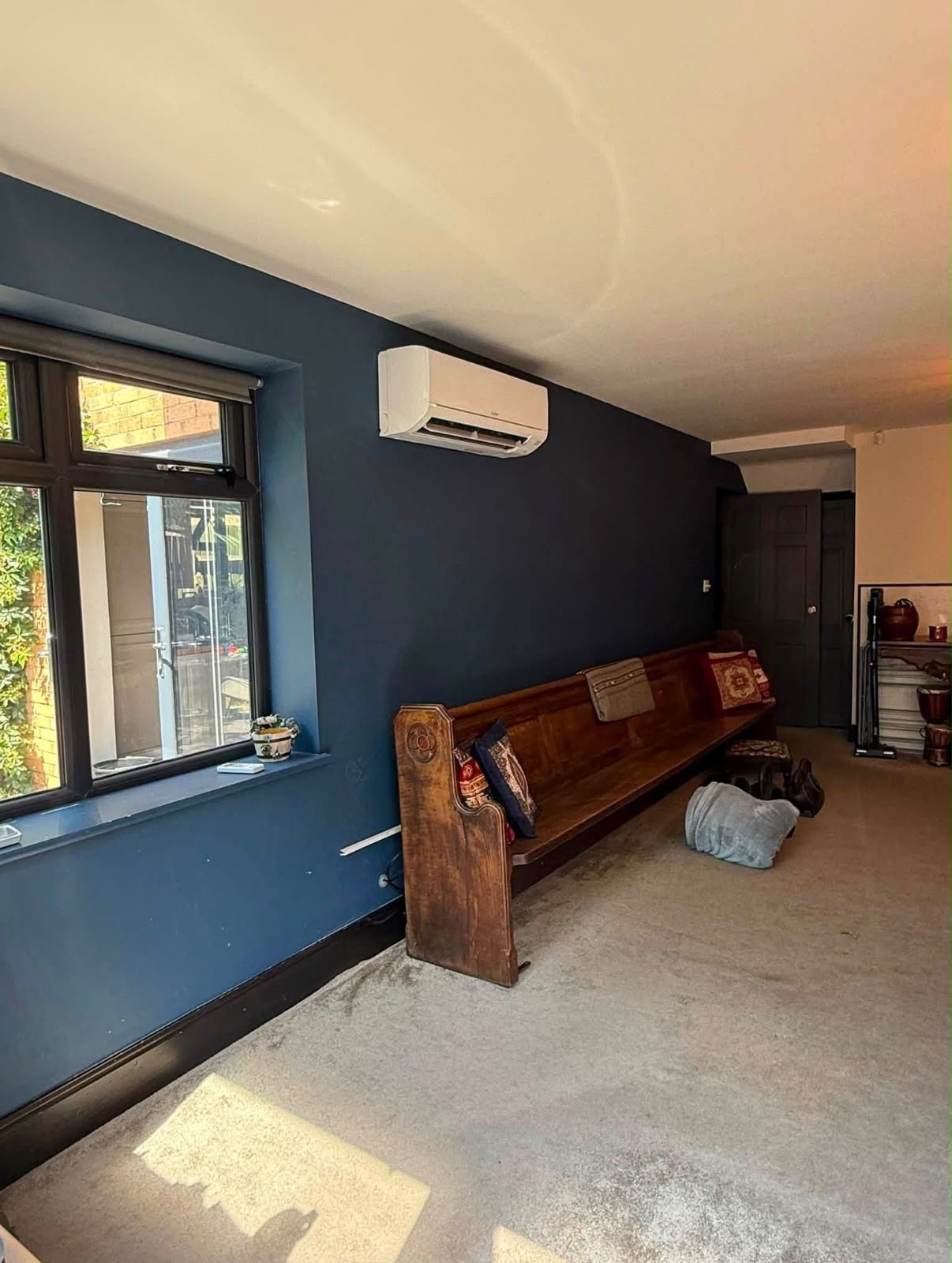
A high wall indoor unit normally sits towards the top of the wall, with space around it for airflow and maintenance. The exact height and clearances depend on the model.
There is no single measurement that suits every wall mounted air conditioner. Follow the installation instructions for the selected equipment.
When planning how to install a wall mounted air conditioning unit, check that there is enough room to open the front panel, remove the filters and work on the unit later.
Ceiling height, beams, sloping roofs and decorative cornices can affect the position. A unit that looks neatly tucked away may be difficult to clean if the ceiling blocks its cover.
Ask the installer to mark the proposed outline on the wall. This makes it easier to judge the height before drilling begins.
The final position should balance room coverage, access, appearance and the manufacturer’s requirements.
Choosing the Best Indoor Unit Position
A suitable indoor air conditioning unit position allows air to travel across the occupied room without major obstructions.
Consider where people sit, sleep and work. Direct airflow onto a bed, sofa or desk can feel uncomfortable even when the room temperature is reasonable.
For a bedroom, discuss the bed position and normal sleeping arrangements. In a home office, consider the desk, screens and any equipment producing heat. In a shop, think about shelving, customer seating and frequently opened doors.
Curtains, tall cupboards and room dividers can interfere with air circulation. Heat sources near the unit may also affect how its temperature sensor responds.
Room size alone is not enough to select cooling capacity. Window area, sunlight, ceiling height, insulation, occupancy and equipment all influence the cooling demand.
A glazed Birmingham extension may need a different assessment from a shaded bedroom of the same floor area.
Good planning for how to install a wall mounted air conditioning unit starts with the room’s actual use.
Choosing the Outdoor Unit Position
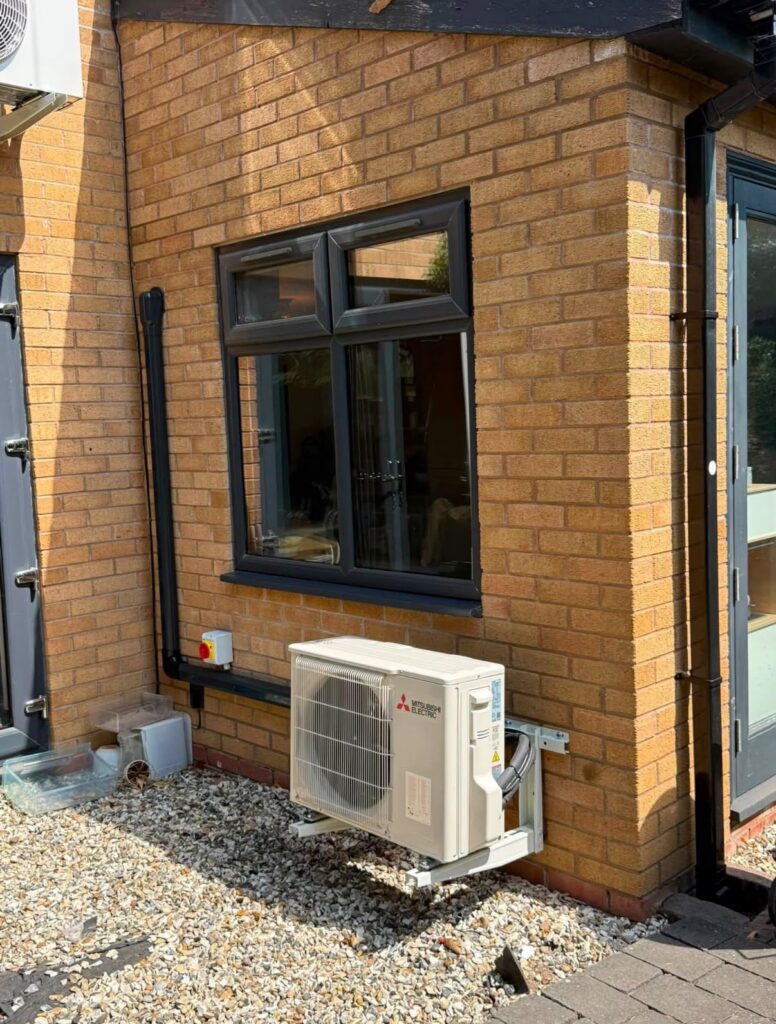
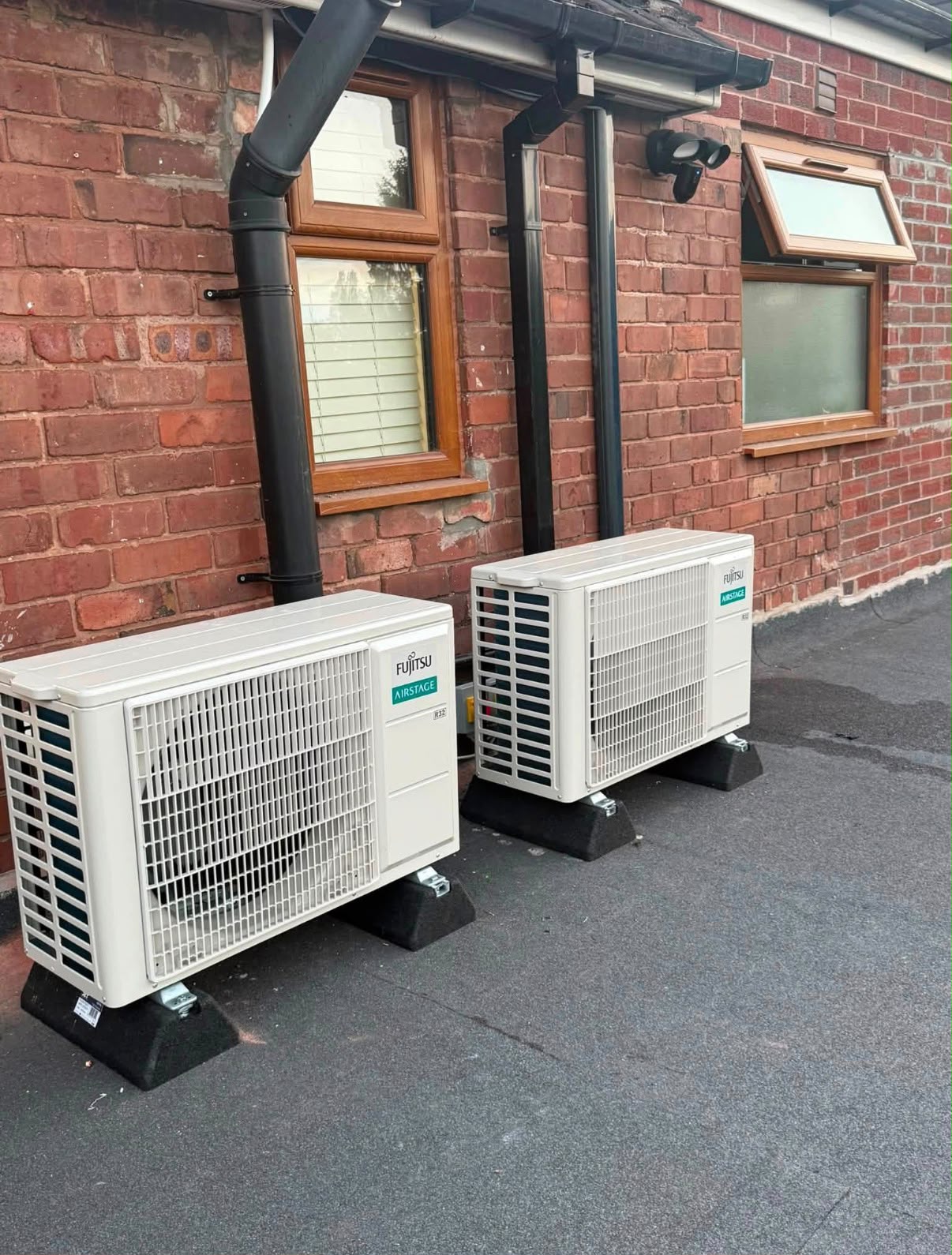
The outdoor air conditioning unit needs a stable location with enough open space to move air and allow servicing.
Possible positions include a suitable ground base or properly designed wall brackets. The choice depends on the building, access and the equipment’s mounting requirements.
Avoid treating a narrow gap beside a fence as automatically suitable. The installer must check the required clearances and whether discharged air could circulate back into the unit.
Noise also deserves attention. Consider nearby bedrooms, neighbouring windows, patios and quiet working areas. A convenient mounting point may still be a poor choice if vibration transfers into an occupied room.
Access should remain practical after installation. Future repairs become harder if a unit is surrounded by permanent landscaping or building additions.
For systems used in heating mode, discuss how outdoor water will drain, including water produced during defrosting. It should not create a problem on a walkway.
Ask to approve the outdoor position alongside the indoor position.
Planning the Route Between the Units
The connecting route is a major part of how to install a wall mounted air conditioning unit.
A split system needs refrigerant pipes and electrical connections between its components. The indoor unit also needs a condensate drain, which may follow a different route.
The shortest path can be useful, but it still needs to meet the selected system’s limits for pipe length and height difference.
Discuss where pipes will leave the indoor unit, pass through the building and reach the outdoor equipment. Check whether the route crosses a bedroom, hallway, shopfront or other visible area.
In a finished room, surface trunking may provide a practical way to cover the services. During refurbishment, there may be opportunities to conceal sections before walls are finished.
Concealed routes still need careful planning. Future access, insulation, drainage and the position of connections all matter.
Agree on the route before work starts. A simple marked photograph can help everyone understand what will remain visible.
Mounting the Indoor Air Conditioning Unit
Once the position is agreed, the installer fixes the mounting plate to suitable structural support.
The plate must be secure and positioned according to the unit’s instructions. The equipment then attaches to it using the manufacturer’s mounting arrangement.
Before drilling, the installer checks the work area and protects nearby furniture and flooring. The wall opening must accommodate the required services without damaging them.
The finished opening needs appropriate sealing and treatment for the wall construction. Where the work affects a fire resisting element, the required protection must be maintained.
Once mounted, the unit should sit securely, with its cover and filters accessible. Pipework behind it must fit without being crushed or forcing the casing away from the wall.
Knowing how to install a wall mounted air conditioning unit includes understanding these less visible details. A straight looking unit still needs sound fixings and properly arranged connections behind it.
Installing the Outdoor Condenser
The outdoor unit, often called the condenser, needs support suited to its weight and mounting arrangement.
A ground installation may require a stable base. A wall installation needs suitable brackets and fixings for the structure. The installer should consider vibration as well as strength.
The equipment must remain accessible for inspections and repairs. Service panels, valves and electrical access points should not be blocked by the mounting position.
Airflow clearances are model specific. The installer should use the selected product’s instructions rather than copying the layout of a nearby installation. Manufacturer documents, such as this Daikin installation manual, set out requirements for particular equipment.
If access involves height or difficult lifting, this needs to be included in the job plan.
For Birmingham properties with narrow side passages or shared outdoor areas, discuss access and the equipment’s footprint before choosing the final location.
Installing Pipework and Drainage
Pipework and drainage deserve close attention when explaining how to install a wall mounted air conditioning unit.
Refrigerant pipes must match the chosen equipment and be installed using the correct materials and methods. Suitable insulation helps limit unwanted heat transfer and condensation on cold surfaces.
The installer should protect the pipes from damage and support them along their route.
The air conditioning condensate drain carries moisture away from the indoor unit. Where gravity drainage is used, the route needs a suitable continuous fall to an appropriate discharge point.
If that route is not possible, a condensate pump may be considered. Ask where it will sit, whether it will be audible and how it can be reached for maintenance.
Drainage should be tested before the job is signed off. Water should leave through the intended route without leaking indoors.
A tidy cover cannot make up for poor drainage. Agree on both the appearance and the practical arrangement before pipework is enclosed.
Connecting and Commissioning the System
Commissioning checks that the installed system is ready to operate properly.
The qualified installer completes the required refrigerant circuit checks and preparation, verifies electrical connections and tests operation according to the manufacturer’s instructions.
For the property owner, understanding how to install a wall mounted air conditioning unit includes knowing what to expect at handover.
Ask for a demonstration of the controls, temperature settings, fan speeds and timers. If heating is included, ask how to switch modes.
The installer should also explain filter access, routine care and what to do if a fault code appears.
Keep the model details, manuals, installation paperwork and warranty information together. Ask whether product registration or a particular servicing schedule is needed for warranty cover.
Before the installer leaves, check the agreed visible finish and confirm that you understand the controls. Raise any unexpected noise, vibration or water leakage so it can be investigated.
How Installers Keep Pipework Looking Neat
A neat wall mounted AC installation starts with planning the visible route.
Trunking can cover pipes, cables and drainage where appropriate. Its size needs to suit the services inside without compressing insulation or restricting drainage.
Discuss the colour, position and direction of the trunking. A route beside a corner or another building feature may look less noticeable than one across the middle of a wall.
Ask where bends, junctions and wall entries will appear. These details can affect the finished appearance more than the length of a straight section.
During renovations, speak to the installer before plastering and decorating. Early coordination may create more options for concealment.
Knowing how to install a wall mounted air conditioning unit neatly also means allowing access where needed. A completely hidden route can become inconvenient if future maintenance requires unnecessary damage to finished surfaces.
Photographs of the agreed route can help avoid misunderstandings.
How Long Does Wall Mounted AC Installation Take?
A straightforward installation serving one room may be planned for around one working day. Treat this as an initial guide, not a guaranteed completion time.
The installer should confirm the expected duration after assessing the property.
Long pipe routes, difficult access, extra electrical work, wall repairs and condensate pumps can add time. Installing several indoor units will also involve more work than fitting a single system.
Ask whether the estimate includes commissioning, clearing up and explaining the controls.
You can help by clearing the indoor work area and providing access to the proposed outdoor location. Move fragile items and explain any parking or building access restrictions in advance.
For a business, agree how drilling and equipment movement will fit around staff and customers.
When comparing how to install a wall mounted air conditioning unit across different properties, the access and connecting route often explain differences in installation time.
Wall Mounted Air Conditioning Installation in Birmingham
Birmingham homes and commercial buildings vary widely. A terraced house, modern flat, office and retail unit can each present different installation choices.
Older properties may need closer attention to wall condition and service routes. Flats may involve shared spaces or building management arrangements. Shops need to consider customer areas, equipment heat and opening hours.
Start with a clear description of the problem. Explain which rooms become uncomfortable, when it happens and whether you also want heating.
Birmingham Refrigeration & Air Conditioning offers residential and commercial installation services across Birmingham and surrounding West Midlands areas. Visit our Birmingham air conditioning installation page to discuss a suitable system for your property.
For a useful quotation, provide room dimensions, photographs and any preferred unit positions. Ask what is included in the price, particularly electrical work, drainage, access equipment and making good.
Ongoing care matters too. Our air conditioning repairs and servicing page explains the support available after installation.
Frequently Asked Questions
Can I install a wall mounted air conditioner myself?
You can prepare access and help plan the layout, but a conventional split system involves specialist refrigerant and electrical work.
If your search for how to install a wall mounted air conditioning unit is about fitting one yourself, arrange a qualified installation assessment before buying equipment. This helps establish whether the system suits your room and proposed positions.
Does a wall mounted air conditioner need an outside wall?
Not always. An internal wall may be suitable if the pipes, cables and drainage can reach appropriate connection and discharge points.
An outside wall may simplify the route, but airflow and room coverage still need consideration.
Can the indoor unit go above a door?
Sometimes. The available height, structural support, required clearances and pipe route must all be suitable.
Check that the door position does not leave the unit directing air into an obstructed area or make filter access difficult.
Can one wall mounted unit cool several rooms?
A single indoor unit is usually selected to serve a particular room or open space.
Some air may move through open doors, but separate rooms may not reach the same temperature. Discuss separate indoor units if you need reliable control in several enclosed rooms.
How much does wall mounted air conditioning installation cost?
The price depends on the equipment, room requirements, number of units, pipe route, electrical work and access.
Ask for an itemised quotation following a survey. Compare the complete scope, including commissioning and any necessary building work, rather than the equipment price alone.
Do I need permission before installation?
Check any landlord, lease or building management requirements before arranging work.
If planning status is uncertain, particularly for a listed property or an installation affecting a sensitive external elevation, ask Birmingham City Council about the proposal before proceeding.
Does wall mounted air conditioning provide heating?
Many split systems provide both heating and cooling. Confirm this when choosing the model.
Tell the installer how you intend to use the heating function so they can consider the room’s needs and the equipment’s performance.
How often should the filters be cleaned?
Follow the manufacturer’s guidance and adjust checks to the conditions in the room. Dust, pets and frequent use can affect how quickly filters become dirty.
Ask for a cleaning demonstration at handover. Routine filter care does not replace professional servicing.
What should I ask before accepting an installation quote?
Ask which model is proposed, why it suits the room and where both units will go.
Confirm the pipe route, drainage arrangement, electrical scope, expected duration, warranty conditions and aftercare. These questions turn a general discussion about how to install a wall mounted air conditioning unit into a clear plan for your property.
How do I arrange wall mounted air conditioning in Birmingham?
Contact Birmingham Refrigeration & Air Conditioning with details of your property, the rooms involved and your preferred timescale.
Ready for reliable comfort? Request your Birmingham air conditioning quote and discuss the right installation for your home or business.