


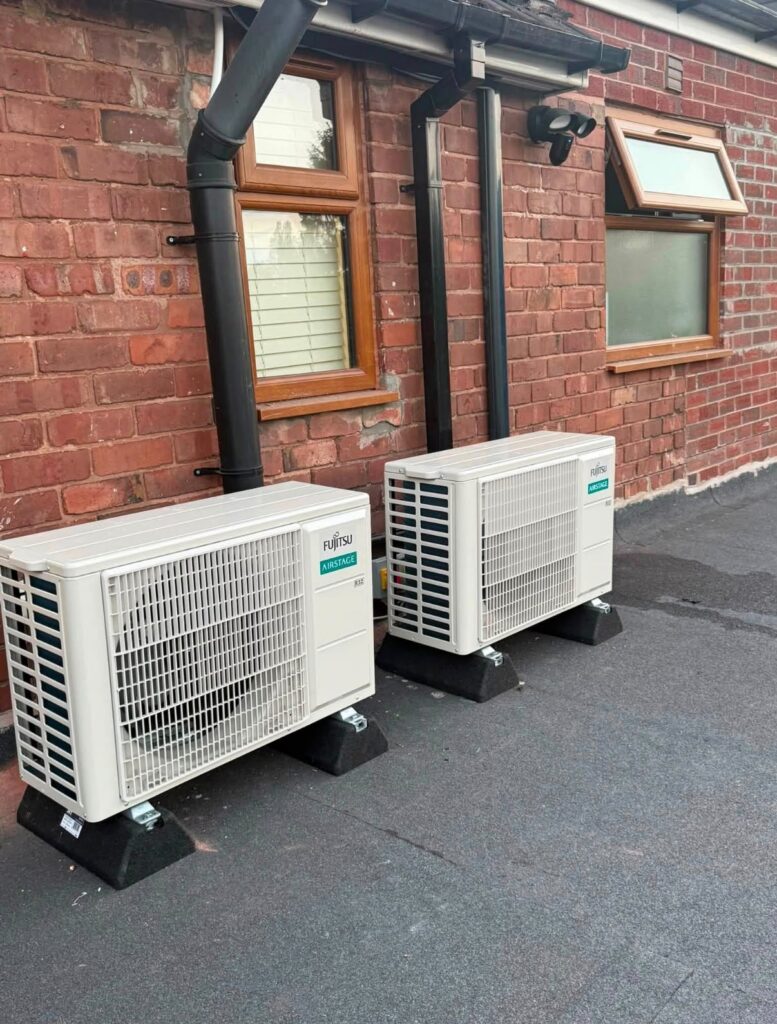
Yes, you can often install air conditioning in a flat, provided the building is suitable and you have any permissions needed. The main checks are your lease or tenancy agreement, the outdoor unit position, planning requirements, noise and safe access for installation.
If you are asking, “can i install air conditioning in my flat?”, start with your property details before choosing a system. A flat with a private balcony may have different options from an upper floor apartment with no outside space.
Hot bedrooms, sunny living rooms and limited airflow can make a flat uncomfortable during warm weather. A suitable cooling system can help you control the temperature without leaving windows open throughout the evening.
Birmingham Refrigeration & Air Conditioning provides air conditioning installation in Birmingham. Contact the team to discuss your flat, the rooms you want to cool and the installation options worth considering.
Why Installing Air Conditioning in a Flat Is Different
Installing air conditioning in a flat involves more than finding room for an indoor unit.
You may own the inside of your home while the freeholder controls the outer walls, roof and shared grounds. Your neighbours may also live directly above, below or beside the proposed equipment.
A practical installation needs to account for:
- Permission to alter the building.
- A suitable position for the outdoor unit.
- Noise and vibration near neighbouring rooms.
- A safe route for pipes and cables.
- Drainage for water produced during cooling.
- Access for future repairs and servicing.
The building itself matters too. A modern apartment with external cladding needs a different assessment from a flat in a converted brick house.
When considering “can i install air conditioning in my flat?”, think about the complete installation. The indoor unit is only one part of the system.
A site survey should help establish what is possible before you commit to equipment or building work.
Checking Whether You Own or Rent the Flat
Start by confirming how you own or occupy the property.
If you own a leasehold flat
Check the lease for rules covering alterations, external equipment, wall openings and nuisance. Ownership of a flat does not automatically give you control over the outside of the building.
If you own a share of the freehold
You may still need agreement from the other freeholders or the management company. A share of the freehold does not remove the terms of your lease.
If you rent the flat
Check your tenancy agreement and ask the landlord before arranging permanent changes.
If you own a shared ownership flat
Check the lease and speak to the housing provider about its approval process.
The Leasehold Advisory Service guidance on alterations explains why the lease and ownership of the affected building parts matter.
For anyone asking, “can i install air conditioning in my flat?”, identifying who can approve the work is a useful first step.
Do You Need Permission from Your Freeholder?
You may need written permission, particularly where installation involves outer walls or other parts of the building controlled by the freeholder.
Your proposed work might include fixing an outdoor unit to a wall, drilling an opening for pipes or using shared space. Check the lease and ask the managing agent which approvals apply before work begins.
Keep the request specific. A marked photograph or simple drawing is easier to assess than a general request for air conditioning.
Useful details include:
- The proposed indoor and outdoor unit positions.
- Equipment dimensions.
- The pipe and cable route.
- The drainage arrangement.
- Noise information.
- Installation and maintenance access.
Written consent helps avoid later disputes about what was agreed. The Leasehold Advisory Service recommends keeping written records of permission.
Is planning permission a separate issue?
Yes. Freeholder consent and planning permission are separate checks.
In England, some air source heat pump installations that provide heating and cooling can qualify as permitted development, subject to all relevant conditions. Equipment used solely for cooling does not qualify under those particular rights.
There are also conditions affecting blocks of flats, outdoor unit positions and protected buildings. A system that provides heating does not automatically qualify.
Check the proposal with Birmingham City Council before proceeding where the planning position is unclear. The Planning Portal guidance for air source heat pumps sets out the relevant limits and conditions.
Do Tenants Need Landlord Permission?
For a fixed installation, ask your landlord for written permission before arranging work.
A split system usually needs wall fixings, an opening for pipework and an electrical connection. These are changes that should be agreed before installation.
If you rent and are wondering, “can i install air conditioning in my flat?”, send the landlord a clear proposal covering the equipment and the work involved.
Agree who will pay for installation, servicing and repairs. Also discuss what happens when the tenancy ends. Will the system remain, or will it need to be removed and the affected surfaces repaired?
Your landlord may also need approval from the freeholder or building manager.
A portable air conditioner may involve fewer changes, but it still needs a suitable exhaust arrangement. Check before altering windows, fitting vents or making any permanent opening.
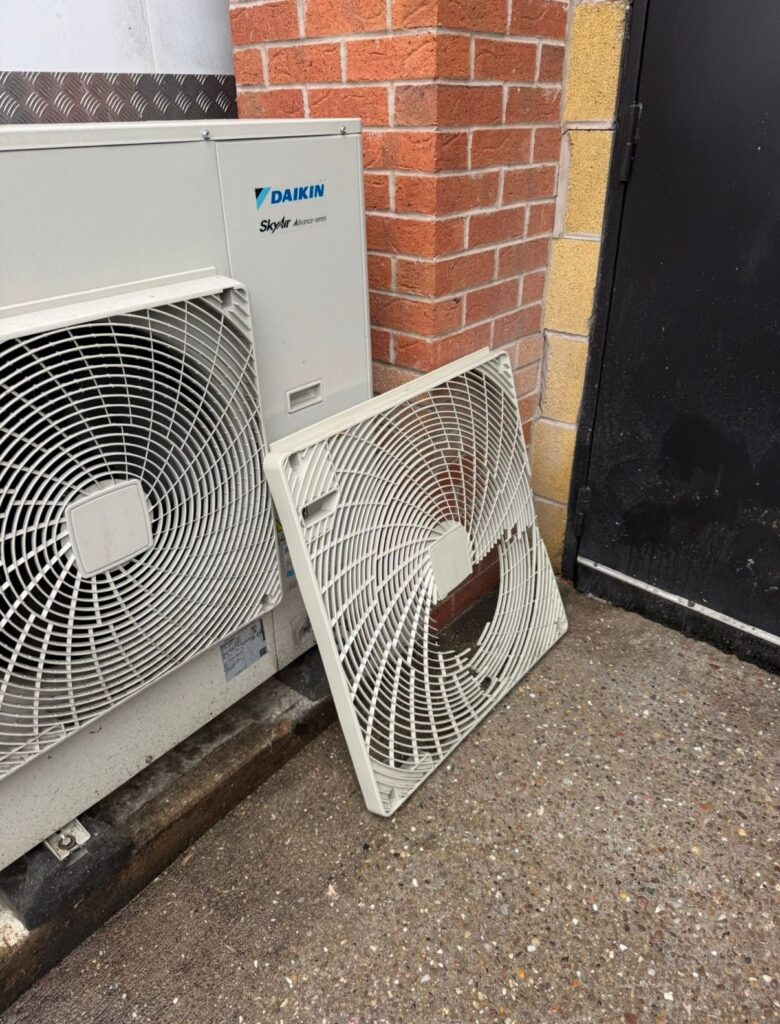
Where Can the Outdoor Air Conditioning Unit Go?
A split air conditioning system has an indoor unit and an outdoor unit connected by refrigerant pipes.
During cooling, heat taken from the room is released outside. This means the outdoor unit needs open airflow and enough clearance around it.
Possible locations include a suitable balcony, an approved outside wall or an agreed area at ground level. A roof position may be possible in some buildings, subject to permission, structural suitability and access.
The location should allow:
- Secure support for the equipment.
- Airflow in line with the manufacturer’s instructions.
- Safe access for inspection and repairs.
- A suitable pipe route.
- Drainage where needed.
- Consideration for nearby windows and outdoor spaces.
An enclosed cupboard or a tightly screened corner can restrict airflow. A unit hidden from view is not necessarily in a suitable position.
If you want a basic explanation of how cooling works, Wikipedia’s overview of air conditioning explains the process of moving heat out of an indoor space.
The question “can i install air conditioning in my flat?” often depends on finding an acceptable outdoor location.
Can Air Conditioning Be Installed on a Balcony?
Yes, a balcony can sometimes provide space for an outdoor unit. Suitability depends on the balcony layout, building rules, airflow and equipment requirements.
A balcony should be assessed rather than assumed to be suitable.
A solid screen may trap warm discharge air. A glazed balcony may become too enclosed. The equipment must also leave enough space for safe access and normal use.
Before choosing balcony air conditioning, check:
- Whether equipment is allowed under the lease.
- Whether there is enough ventilation.
- Whether the structure and mounting arrangement are suitable.
- Whether vibration could travel into the building.
- Whether the unit would blow warm air towards neighbours.
- Whether drainage can be managed properly.
Do not assume that placing a unit on the balcony floor removes the need for permission. Pipes, cables and changes to the outside appearance still need consideration.
For a resident asking, “can i install air conditioning in my flat?” because they have a balcony, the answer may be yes. The next step is to assess the actual space and proposed system.
Managing Noise Around Neighbouring Flats
Noise deserves careful attention in a block of flats, especially when bedrooms are close together.
Both indoor and outdoor units produce sound. Vibration can also travel through a mounting bracket, wall or floor.
Choosing a quiet model helps, but the installation position matters just as much. A unit beside a neighbour’s bedroom window may cause more disturbance than the same equipment in a more suitable location.
A careful assessment should consider:
- Nearby bedrooms and windows.
- The expected hours of use.
- Sound at different operating speeds.
- The background sound level.
- Mounting methods and vibration control.
- Sound reflected by nearby walls.
Ask what the quoted noise figures represent. Figures measured under different conditions are not always directly comparable.
For bedroom air conditioning, the indoor position also matters. Avoid directing a strong stream of air towards the bed, and consider whether a condensate pump would be audible at night.
If your concern is “can i install air conditioning in my flat without disturbing my neighbours?”, discuss noise before the equipment position is agreed.
How Pipework Is Installed in a Flat
A typical split system needs refrigerant pipes, electrical connections and a drain for water collected during cooling.
The route depends on the position of the indoor and outdoor units. It may pass directly through an outside wall or follow a longer route through suitable parts of the flat.
Some pipes can be concealed during renovation work. In an existing home, surface trunking may provide a practical way to keep them neat and accessible.
Choosing the pipe route
The installer should explain where pipes will run, which openings are needed and what will remain visible.
A short route can simplify the work, but it must still meet the system’s design requirements. Pipes should not be routed through shared areas without the necessary agreement.
Planning drainage
Cooling removes moisture from the air. This water needs a suitable drainage route.
Where possible, it can drain by gravity. If that is not practical, a condensate pump may be needed. Pump position, sound and access for maintenance should be considered.
Water should not be left to drip onto another balcony, a walkway or the building below.
Protecting the building
Openings must be properly finished. Where work passes through a fire resisting element, its required protection must be maintained.
Ask to see the proposed route before approving the installation. This is particularly useful if appearance is a priority.
Can Air Conditioning Be Installed in an Upper Floor Flat?
Yes, air conditioning in an upper floor flat can be possible. Height alone does not decide whether a system will work.
The main issues are access, outdoor unit placement, pipe length, height difference and permission.
Each system has limits for the distance between its indoor and outdoor units. An installer should check these against the actual layout.
Access can also affect the cost. Some projects need scaffolding or specialist equipment to reach the installation position safely.
Future maintenance matters too. A unit should not be placed somewhere that is practical to reach only during major building work.
If you live on a higher floor and are asking, “can i install air conditioning in my flat?”, provide the floor level, photographs and any balcony or roof access details when making an enquiry.
These details help identify possible obstacles early. They do not replace a survey, but they make the first discussion more useful.
Can You Have Air Conditioning Without an Outdoor Unit?
Yes, there are options for air conditioning without an outdoor unit, although each has limits.
Portable air conditioners
A portable air conditioner usually sends hot air outside through an exhaust hose.
It can provide cooling for a room without installing a separate outdoor compressor. However, it needs a suitable window arrangement, takes up floor space and produces operating noise inside the room.
An open gap around the hose allows warm air back in, so a suitable window seal matters.
Fixed monobloc air conditioners
A fixed monobloc system contains its main components in one indoor cabinet. Many models use openings through an outside wall to exchange air.
There is no separate outdoor box, but the wall openings and external grilles still affect the building. Permission may therefore be needed.
Fans and evaporative coolers
A fan moves air across your skin but does not remove heat from the room in the same way as an air conditioner.
An evaporative cooler works differently and adds moisture to the air. It should not be treated as a direct replacement for a refrigerant air conditioning system.
If the reason you are asking “can i install air conditioning in my flat?” is a restriction on outdoor equipment, compare the remaining options carefully. No outdoor unit does not mean no installation requirements.
Cooling More Than One Room in a Flat
One indoor unit should not be assumed to cool an entire flat evenly.
A unit in the living room may provide limited benefit to a bedroom around a corner or behind a closed door. Layout, airflow and heat gain all affect the result.
A multi split system connects several compatible indoor units to one outdoor unit. This can be useful where outdoor space is limited and more than one room needs cooling.
However, each room still needs suitable pipework and drainage. The outdoor unit must also have enough capacity for the intended use.
Before choosing air conditioning for multiple rooms, decide:
- Which rooms become uncomfortable.
- When each room is occupied.
- Whether bedroom doors stay closed.
- Whether several rooms need cooling together.
- Whether heating is also required.
Room size is only part of the calculation. Window area, sunlight, insulation, ceiling height and heat from equipment also matter.
A sunny home office may need a different approach from a shaded bedroom of the same size.
For some flats, cooling one frequently used room is enough. Others benefit from separate indoor units with individual temperature controls.
Air Conditioning for Flats in Birmingham
Birmingham flats range from converted houses to city centre apartments and larger residential blocks.
The right cooling system depends on the building as much as the postcode. A flat in Edgbaston may have a different layout from an apartment in Digbeth or the Jewellery Quarter.
Large windows, afternoon sun and limited window opening can all contribute to overheating. Before choosing equipment, explain when the flat becomes uncomfortable and which rooms are affected.
Birmingham Refrigeration & Air Conditioning offers air conditioning installation services. Discuss your property with the team to understand which options may suit your space.
If you are still asking, “can i install air conditioning in my flat?”, have these details ready:
- Your Birmingham postcode.
- Whether you own or rent.
- Your floor level.
- The rooms you want to cool.
- Any available balcony or outside space.
- Photographs of possible equipment positions.
- Any rules already supplied by your building manager.
What should an installation quote cover?
Ask for a clear description of the proposed system and work.
The quote should identify the equipment, pipe routes, drainage, electrical work and access arrangements. Confirm whether making good, access equipment or permission related costs are included.
Ask about the warranty, servicing requirements and what happens if a fault develops.
A low headline price is difficult to assess without knowing what the installation includes.
Planning for ongoing care
Filters, coils and drains need attention to keep the system working properly.
Follow the manufacturer’s instructions for routine cleaning and arrange professional servicing as appropriate for the equipment and its use.
For existing systems, Birmingham Refrigeration & Air Conditioning provides air conditioning repairs and servicing, including support for suitable residential equipment.
Frequently Asked Questions
Can I install air conditioning in my flat if I own it?
Often, yes. You still need to check your lease, control of the affected building parts and any planning requirements. Owning the flat does not automatically mean you can alter the outside walls or use shared space.
Can I install air conditioning in my flat without a balcony?
Possibly. An approved wall position or suitable outside area may be available. If there is no acceptable location for an outdoor unit, a portable or fixed monobloc system may be worth assessing.
Do all flat air conditioning systems need planning permission?
No single answer applies to every installation. Some heating and cooling systems can meet permitted development conditions, while other proposals need an application. Check the equipment, building and proposed position against the current planning guidance.
Can I install a split air conditioning system myself?
Work involving equipment containing fluorinated refrigerant requires the correct qualifications. Use a suitably qualified installer for the refrigerant work and competent people for electrical and building work. The government guidance on F gas qualifications explains the requirements.
How much does air conditioning for a flat cost?
The cost depends on the system, number of rooms, pipe length, electrical work and access. An upper floor installation with difficult access may cost more than a straightforward project. Request a survey and an itemised quotation.
Is air conditioning expensive to run?
Running cost depends on electricity use, your tariff, room conditions and how long the system operates. A correctly sized system, sensible temperature setting and clean filters can help avoid unnecessary energy use.
Can air conditioning heat my flat too?
Many systems provide both heating and cooling. Check the model’s heating performance and suitability for your rooms before relying on it as your main heat source.
Will air conditioning provide fresh air?
Most standard domestic split systems mainly recirculate indoor air. They do not replace the need for appropriate ventilation. Ask about ventilation separately if the flat also feels stuffy or has moisture problems.
How long does installation take?
The time depends on the number of units, pipe routes, access and building requirements. Ask for a schedule after the survey. Permission checks may take longer than the physical installation.
What should I do before booking installation?
Check your lease or tenancy agreement, identify who must approve the work and arrange a survey. Confirm the equipment location, drainage, noise considerations and full cost before agreeing to proceed.
Get Expert Help With Air Conditioning for Your Birmingham Flat
A cooler flat starts with a suitable plan. Check the permissions, agree the equipment positions and choose a system based on the rooms you actually use.
Birmingham Refrigeration & Air Conditioning can be your next point of contact for air conditioning in Birmingham.
Contact Birmingham Refrigeration & Air Conditioning today to discuss your flat and request an installation quote.